
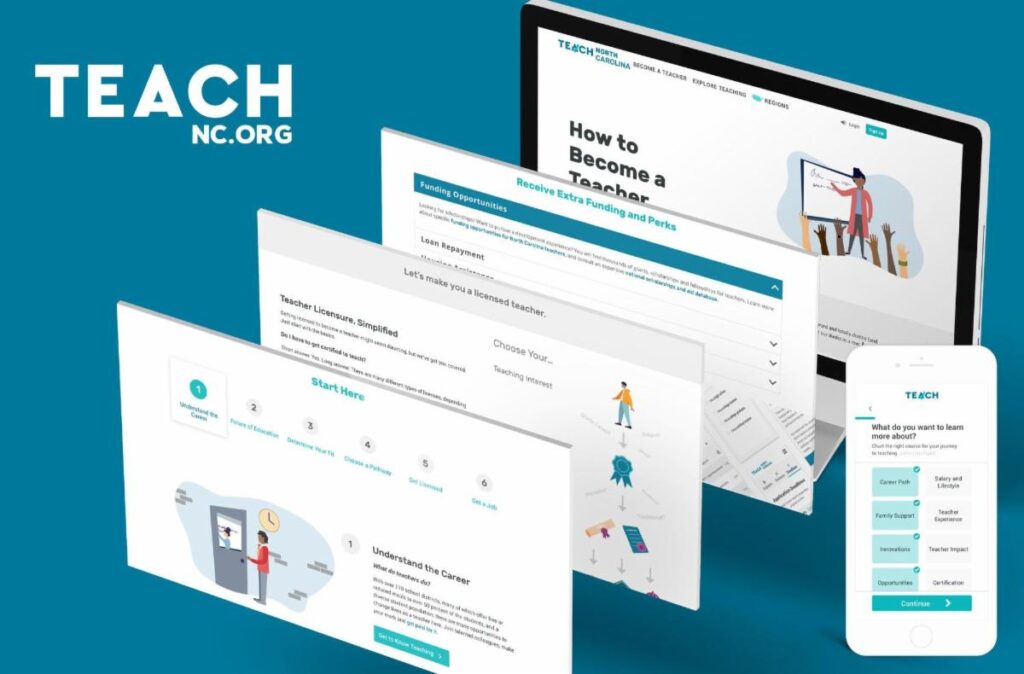
Announcing TeachNC: The One-Stop Resource for Becoming a Teacher in North Carolina We are thrilled to share that, for the first time ever, North Carolina has a unified, statewide teacher recruitment initiative that elevates the teaching profession and seeks to fill critical vacancies! At the August 14th meeting of the North Carolina Education Cabinet, education leaders and stakeholders gathered to celebrate the launch of TeachNC. Aligning with BEST NC’s longstanding commitment to improving the educator pipeline, we have collaborated with the North Carolina Department of Public Instruction and TEACH.org to create this statewide teacher recruitment initiative. TeachNC employs both a broad media campaign and a robust web platform to support teacher candidates in their quest to become a teacher in North Carolina. Members of the NC Education Cabinet stand in support of TeachNC. Why TeachNC? Every student deserves a quality education — that’s a given. What you might not know is that teacher quality is the #1 in-school factor for guaranteeing students’ long-term success. Since educators play a crucial role in the lives of our students, TeachNC is designed to inspire teaching candidates to pursue the career and remove barriers that stand in their way. The Audience The TeachNC initiative seeks to provide accurate and compelling information about the teaching profession that will be useful to both potential candidates and the general public. TeachNC targets students who are just beginning to think about their career options all the way to mid-career professionals who may be considering a career change. The Campaign TeachNC’s media campaign, “Teachers Have Better Work Stories,” highlights the ways in which teaching profession is challenging, fulfilling, and constantly evolving. These career qualities are particularly appealing to Millennials and Generation Z as they seek fulfilling professions. TeachNC’s first public service announcement can be viewed below. TeachNC will also be curating Better Work Stories from real North Carolina teachers. To view the stories collected so far, click here. If you are a teacher or know of one who should share their Better Work Story, please share it here. The Website TeachNC.org is an interactive digital recruitment platform that centralizes all of the information and resources needed to become a teacher: Licensure Understanding licensure is the first step to becoming a teacher. TeachNC outlines licensure requirements and pathways for all candidates, from beginning college students to mid-career professionals. Programs To help candidates choose an educator preparation program (EPP) that will qualify them for licensure, TeachNC provides a database of North Carolina’s EPPs, criteria to help candidates compare options, and advisors to provide 1-on-1 support. Affordability To help candidates understand affordability, TeachNC provides a finance guide with best practices, local and national scholarship listings, and cost-saving strategies. TeachNC also offsets candidates application costs through a $100 reimbursement scholarship. Applications Understanding licensure is the first step to becoming a teacher. TeachNC outlines licensure requirements and pathways for all candidates, from beginning college students to mid-career professionals. More to Come, and What YOU Can Do: Over the next months and years, TeachNC will continue to expand its resources with district landing pages and updated information as licensure requirements change. In the meantime, here is what you can do to help: If you know someone who is thinking about becoming a teacher, please share www.TeachNC.org and encourage them to register to get (free) resources. If you are a teacher and want to share your Better Work Story, take just a minute to film with your phone and upload it here. If you have any ideas or questions, reach out to the TeachNC Director, Princess Brown at Princess@TeachNC.org. TeachNC Partners TeachNC Funders
Investing in education is the right move for the legislature- Winston-Salem Journal- Allen E. Gant Jr.
Education transformation in North Carolina depends on our ability to attract and retain the best and brightest teachers and school leaders. That’s why we commend our elected leadership for its bold commitments to raise teacher pay.
Investing in education is the right move for legislature- EdNC- Allen E. Gant Jr.
[vc_row][vc_column width=”1/1″][vc_hidrop] Education transformation in North Carolina depends on our ability to attract and retain the best and brightest teachers and school leaders. That’s why we commend our elected leadership for their bold commitments to raise teacher pay. The National Education Association reports that North Carolina has raised teacher salaries faster than any other state over the last two years. More importantly, legislative leadership has made it a top priority to significantly boost not just starting pay, but pay for all early career teachers. Business leaders know that talent is the key to the success of any organization. That’s why we must continue investing in a teacher pay plan that enables every teacher to earn more, earlier in their career and compensates experienced teachers who expand their career into classroom leadership and/or hard-to-staff schools and subjects. BEST NC members believe North Carolina can have the best education system in the nation. We start by looking at the reality of today’s teaching profession. The truth is that schools are competing with other professions to retain new, talented teachers. Even though starting teacher pay was raised significantly over the last two years, teachers quickly fall behind their college graduate peers with the slow progression of our pay schedule. That is one big reason turnover is so high among younger teachers in North Carolina. The other hard reality is that we don’t compensate teachers as we do other highly-skilled professions. In most other professions, earnings potential keeps up with early career growth and includes additional opportunities for specialized skills or achievement. Currently, North Carolina teachers can’t reach top earnings until they are nearly 50 years old. No other high-skilled profession follows such a slow curve. To be clear – teaching is a highly skilled profession, requiring teachers to make complex, real time decisions to ensure students are engaged and learning. Plus, the demands of the economy require teachers to meet higher expectations and provide personalized learning for all students. We must ensure that our classroom teachers have the respect and compensation commensurate with this demanding job. Giving higher raises to early-career teachers will help recruit top talent to the profession, reduce turnover, and enable them to earn more, faster. We can continue building on these gains by compensating experienced teachers for taking on leadership roles, teaching in hard to fill subject areas or taking positions in hard to staff schools. We commend both the Governor and House leadership for prioritizing pay increases for teachers and principals in their budget proposals. The Senate pay plan that was previewed this week appears to build on those proposals, offering a multi-year commitment to a visionary plan for paying teachers commensurate with the importance and skill of their profession. About the Author: Allen E. Gant, Jr., is the chairman and CEO of Glen Raven, Inc. and a member of BEST NC. Click here to view Allen E. Gant Jr.- Investing in education PDF [/vc_hidrop][/vc_column][/vc_row]
Promising signs on teacher pay at legislature- The Charlotte Observer- Allen E. Gant Jr.

[vc_row][vc_column width=”1/1″][vc_hidrop] BY ALAN E. GANT JR. Gant Photo by – Steve Exum Special to the Observer Education transformation in North Carolina depends on our ability to attract and retain the best and brightest teachers and school leaders. That’s why we commend our elected leadership for their bold commitments to raise teacher pay. The National Education Association reports that North Carolina has raised teacher salaries faster than any other state over the last two years. More importantly, legislative leadership has made it a top priority to significantly boost not just starting pay, but pay for all early career teachers. Business leaders know that talent is the key to the success of any organization. That’s why we must continue investing in a teacher pay plan that enables every teacher to earn more earlier in their career and compensates experienced teachers who expand their career into classroom leadership and/or hard-to-staff schools and subjects. BEST NC members believe North Carolina can have the best education system in the nation. We start by looking at the reality of today’s teaching profession. The truth is that schools are competing with other professions to retain new, talented teachers. Even though starting teacher pay was raised significantly over the past two years, teachers quickly fall behind their college graduate peers with the slow progression of our pay schedule. That is one big reason turnover is so high among younger teachers in North Carolina. The other hard reality is that we don’t compensate teachers as we do other highly skilled professions. In most other professions, earnings potential keeps up with early career growth and includes additional opportunities for specialized skills or achievement. Currently, North Carolina teachers can’t reach top earnings until they are nearly 50 years old. No other high-skilled profession follows such a slow curve. To be clear – teaching is a highly skilled profession, requiring teachers to make complex, real-time decisions to ensure students are engaged and learning. Plus, the demands of the economy require teachers to meet higher expectations and provide personalized learning for all students. We must ensure that our classroom teachers have the respect and compensation commensurate with this demandingjob. Giving higher raises to early-career teachers will help recruit top talent to the profession, reduce turnover, and enable them to earn more, faster. We can continue building on these gains by compensating experienced teachers for taking on leadership roles, teaching in hard-to- fill subject areas or taking positions in hard-to- staffschools. We commend both the governor and House leadership for prioritizing pay increases for teachers and principals in their budget proposals. The Senate pay plan that was previewed Wednesday appears to build on those proposals, offering a multi-year commitment to a visionary plan for paying teachers commensurate with the importance and skill of their profession. Gant is chairman and CEO of Glen Raven, Inc. and a member of BEST NC. Click here to view Allen E. Gant Jr. -Investing in education PDF [/vc_hidrop][/vc_column][/vc_row]
Legislatures get mixed bag of teacher pay proposals
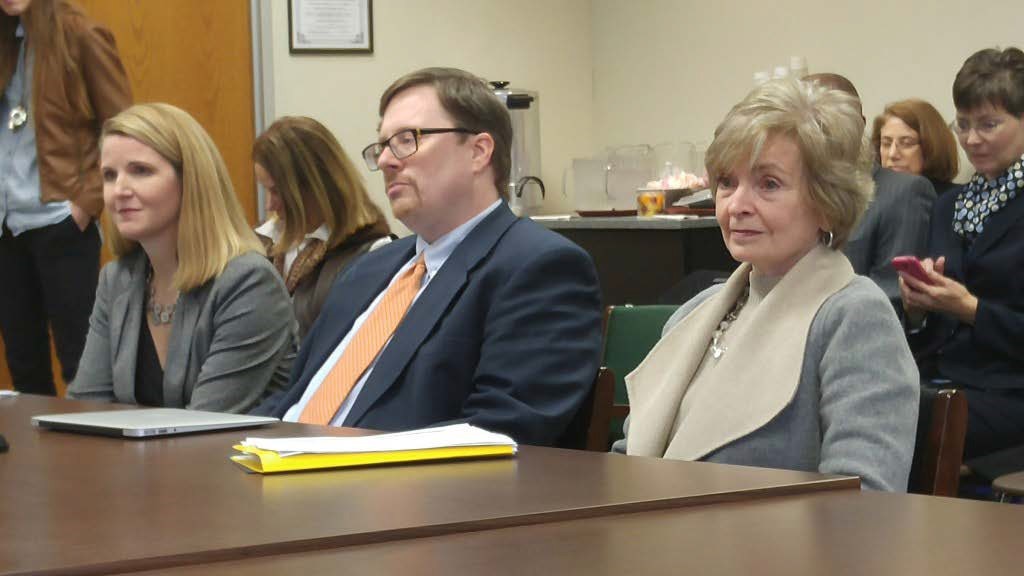
NEWS: CJ EXCLUSIVES Legislators Get Mixed Bag of Teacher PayProposals Atkinson’s call for 10-percent hike draws cool reception Legislators Get Mixed Bag of Teacher Pay Proposals – Carolina Journal From left, Best NC’s Brenda Berg, the John Locke Foundation’s Terry Stoops, and state Superintendent June Atkinson prepare to discuss teacher compensation on Jan. 27 before a House committee. (CJ Photo by Barry Smith) Barry Smith in CJExclusives February 1, 2016 4:30PM Before a state House committee last Wednesday, state Superintendent of Public Instruction June Atkinson recommended that all public school teachers in North Carolina get a 10 percent boost in their pay as part of a four-part plan to increase teacher compensation. Several members of the House Select Committee on Education Strategy and Practices were skeptical of the value of across-the-board raises along with their cost. In a presentation later that day, Terry Stoops, director of research and education studies at the John Locke Foundation, said universal pay raises send the wrong signals to the best and worst classroom teachers. And in remarks the following day to the same panel, House Speaker Tim Moore, R-Cleveland, rejected the idea of a 10-percent raise. Atkinson, who is running for re-election, likened the tiers of compensation to a four-layered wedding cake. The base level of the cake must be competitive enough to be attractive, Atkinson said. “I would want North Carolina to be extremely bold and to look toward a 10 percent increase for all of our teachers,” Atkinson said. The cost for providing all teachers 10 percent raises would be around $540 million. Rep. Jonathan Jordan, R-Ashe, asked Atkinson if spending the additional money would guarantee an end to the state’s teacher compensation problems. Atkinson said that she wanted to provide the committee with cost figures. “I recognize that it is a big item,” Atkinson said. “As state superintendent you have in statute that it is my responsibility to let the needs of our schools be known. If I were in your shoes, I would be worrying about that money, too.” Also presenting to the committee Wednesday were Stoops, Trip Stallings, director of policy research at the Friday Institute for Educational Innovation at N.C. State University, and Brenda Berg, president and CEO at Best NC. Stoops said he didn’t like across-the-board raises because they encourage bad teachers to remain on the job. “When you raise salaries across the board, both your best teachers and your worst teachers receive that salary, you are incentivizing the bad teachers to stay in the profession because they’re assuming that the across-the-board pay increase is what they will keep receiving, regardless of how they are performing,” Stoops said. “This creates a situation where we are essentially allowing those poor teachers to stay in the profession, and not really rewarding our most effective teachers.” Stoops said having a performance-based pay or differentiated pay would allow the best teachers to receive the compensation they deserve. Atkinson said the second layer of compensation requires identifying a certain percentage of teachers to be designated as teacher leaders, who would get additional pay for their roles. These teachers could be instructional coaches, peer evaluators, or grade level coordinators, among other things, she said. A third layer would boost compensation to attract teachers to low performing schools. The fourth layer would provide bonuses for teachers at schools that exceed anticipated growth, Atkinson said. Stallings said that differential pay is complex and cautioned against having a one-size-fits all approach to such salary boosts. He said that there is “very little evidence” of an impact on student performance when the focus is on pay-for-performance only. “What works in Charlotte is probably not going to work in Bertie County,” Stallings said. Stoops said that the purpose for having differential pay is teacher retention. He also said that teachers leave their job for various reasons, not just pay. “It’s not just compensation,” Stoops said. “It’s personal circumstances. They don’t like their principal. They think the school district is too big. The working conditions are terrible. They don’t have the books that they need, or the labor market is somehow enticing them to move on to another field.” Berg, from BEST NC, a nonprofit coalition of business leaders promoting improvements in public schools, said there a national crisis is brewing because millennials don’t want to go into the teaching profession. “Compensation is a piece of the puzzle,” Berg said. But she suggested that there is a need to treat teachers more like professionals. Berg offered some suggestions, such as providing scholarships or repaying student loans to teachers who get their degrees in North Carolina and agree to work hereafterward. “We need to elevate our respect for teachers,” Berg said. Rep. Paul “Skip” Stam, R-Wake, also suggested that the state no longer consider individual teachers’ salaries public records. “I think that’s the main reason that so many of they say they don’t want a differentiated performance pay because of envy and jealousy,” Stam said. “They don’t want their friend down the hall to know that they’re making $2,000 more than they are.” Even though Moore rejected Atkinson’s proposal for a 10-percent raise, Stoops said he expected this year’s short session of the General Assembly to enact a smaller across-the-board pay increase. “The amount of that pay raise will depend on the revenue outlook and the pressures from other budgetary areas,” Stoops said. “I would say 5 percent would be the ceiling.” categories: Education (PreK-12), K-12 Education, Spending & Taxes tags: ncga, teacher pay Click here to view the Legislators Get Mixed Bag of Teacher Pay Proposals PDF