Classroom Teacher Allotments North Carolina Public Schools

Note: This blog post features a brief from page 22 of our 2018 Facts & Figures publication, contextualizing North Carolina education data with a short description of an historical feature or a critical issue in North Carolina. Read more at www.NCEdFacts.org. In North Carolina, the state allots teaching positions to each school district based on the number of students in each grade, according to specific ratios set by the General Assembly. The classroom teacher allotment is by far the largest single state allotment; salary and benefits for teaching positions represent approximately 55% of total state support for education. Over the past seven years, the state changed allotment ratios four times, generally decreasing student to teacher ratios in the lower grades, and increasing them in grades 4 through 12. Source: NC DPI Highlights of the Public School Budget In 2016, the General Assembly enacted legislation requiring actual average student to teacher ratios in grades K-3 not to exceed the allotment ratios starting in the 2018-19 academic year. This has sparked considerable debate, in part because for the first time since the development of the state’s Basic Educational Program, districts will be required to use the state’s full position allotment to fund classroom teachers. Currently, there is no separate allotment for elementary school art, music, physical education, and world language teachers.
K-12 Education Finance in North Carolina

Note: This blog post features a brief from page 42 of our 2018 Facts & Figures publication, contextualizing North Carolina education data with a short description of an historical feature or a critical issue in North Carolina. Read more at www.NCEdFacts.org. In North Carolina and nationwide, public education is financed through federal, state, and local expenditures. Nearly two-thirds of total K-12 public education funding in North Carolina comes from the state through position, dollar and category allotments (such as allotments for teachers, principals, teacher assistants, textbooks, classroom materials, and transportation). Districts received additional funding from the state based on student learning needs (such as for children with disabilities, English language learners, and economically disadvantaged students). The state also provides supplemental funding to low-wealth counties (68 across the state) and small counties (27). Combining state funding allotments, a first grade student with no special learning needs would receive $5,861 in state funding; an economically disadvantaged first grade student with limited English proficiency and special learning needs in a small, low-wealth county would receive $17,279 in state education funding. Roughly 11% of K-12 public education funding in North Carolina comes from the Federal government. Federal funds mainly support child nutrition, students with disabilities, and students from low-income households. Source: NC DPI 2017 Highlights of the Public School Budget K-12 Education Finance In addition to state and federal funds, local North Carolina counties provide additional funding to supplement state support for K-12 school operations; and provide funds to build, furnish, and maintain K-12 school buildings. Local dollars fund nearly 28,000 positions in K-12 public schools, including 7,315 service workers, 6,313 teachers, 1,937 teacher assistants, and 756 assistant principals across the state. Local funds for school operations range from $849 per pupil in Robeson County to $6,151 in Chapel-Hill/Carrboro City Schools. Source: NC DPI Annual Expenditure Report by LEA
Shamrock Gardens Elementary School: A Blueprint for Educator Innovation
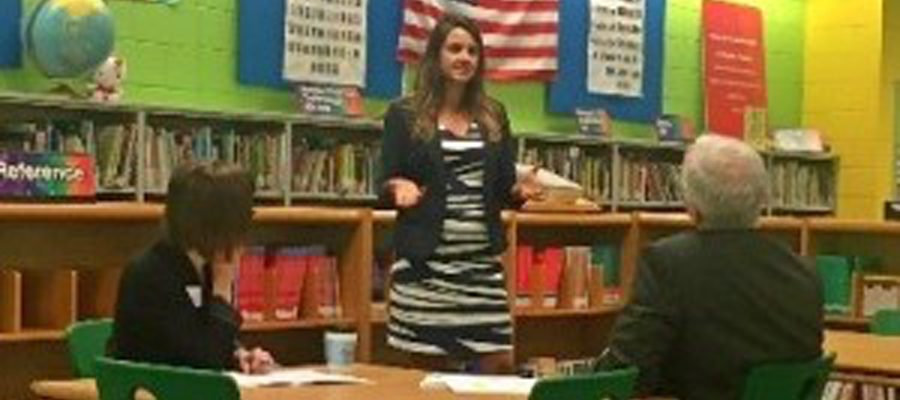
May 2017, By Brenda Berg, CEO, BEST NC. For several years, a primary focus of BEST NC’s student-focused advocacy work has been around the importance of having strong, well-supported educators in every classroom from; pre-K to higher education. Without great educators, anything else we advocate for is unlikely to work. That’s why we developed our primary advocacy priority, which we call Educator Innovation.