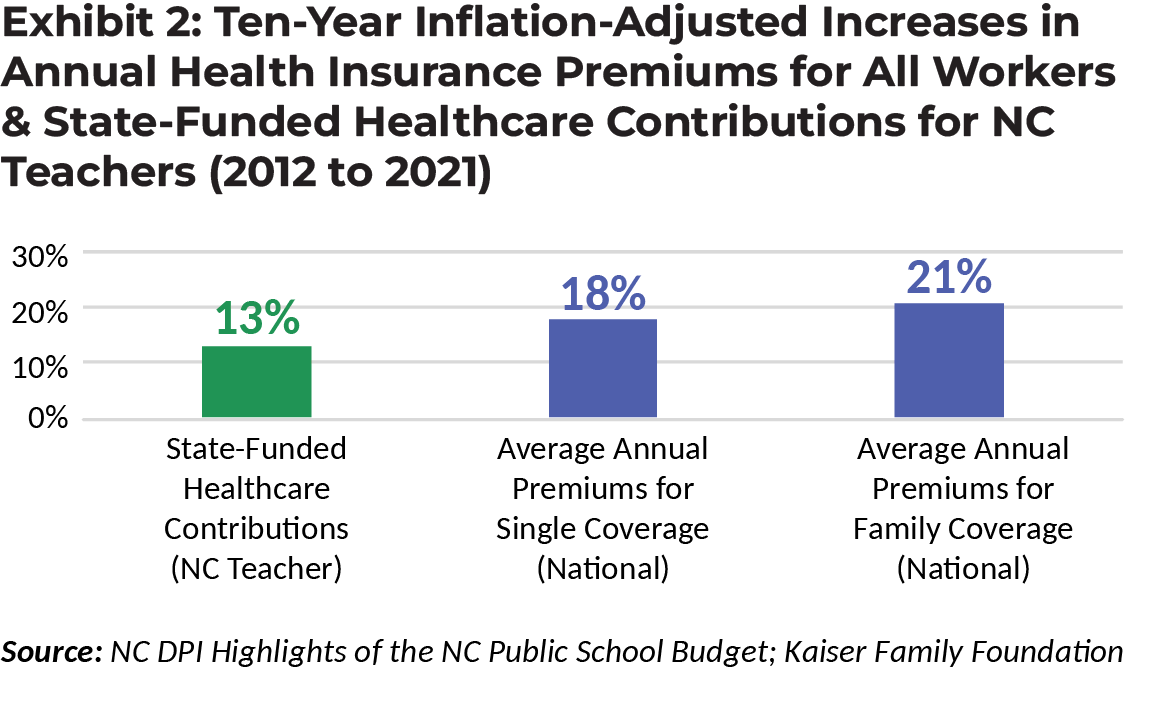

Best Practices in Teacher Pay: Teacher Benefits Overview & Spotlight on Healthcare Benefits
A comprehensive, professional compensation plan includes layered pay strategies that build on one another to ensure the recruitment and retention of a high-quality workforce. This is the tenth in a series of blogs highlighting best practices in teacher pay featured in detail in BEST NC’s report, Teacher Pay in North Carolina: A Smart Investment in Student Achievement.
Teacher Benefits Overview
Teacher retirement and healthcare benefits costs have risen sharply in the past two decades and require increasing levels of investment from states in order to maintain benefits levels and to fully fund pension obligations. As the costs of these benefits rise, state funding that could otherwise be used to increase teacher pay is diverted.
Chad Aldeman, policy director of Georgetown’s Edunomics Lab, notes that, after adjusting for inflation and rising student enrollment, total education spending in the United States increased by 29% from 1995 to 2015. Yet, despite this increase in education spending, inflation-adjusted teacher salaries actually decreased during this period. Aldeman attributes the stagnant teacher earnings amidst increased education spending to three factors: decreasing student-to-staff ratios, rising healthcare costs, and rising retirement costs.
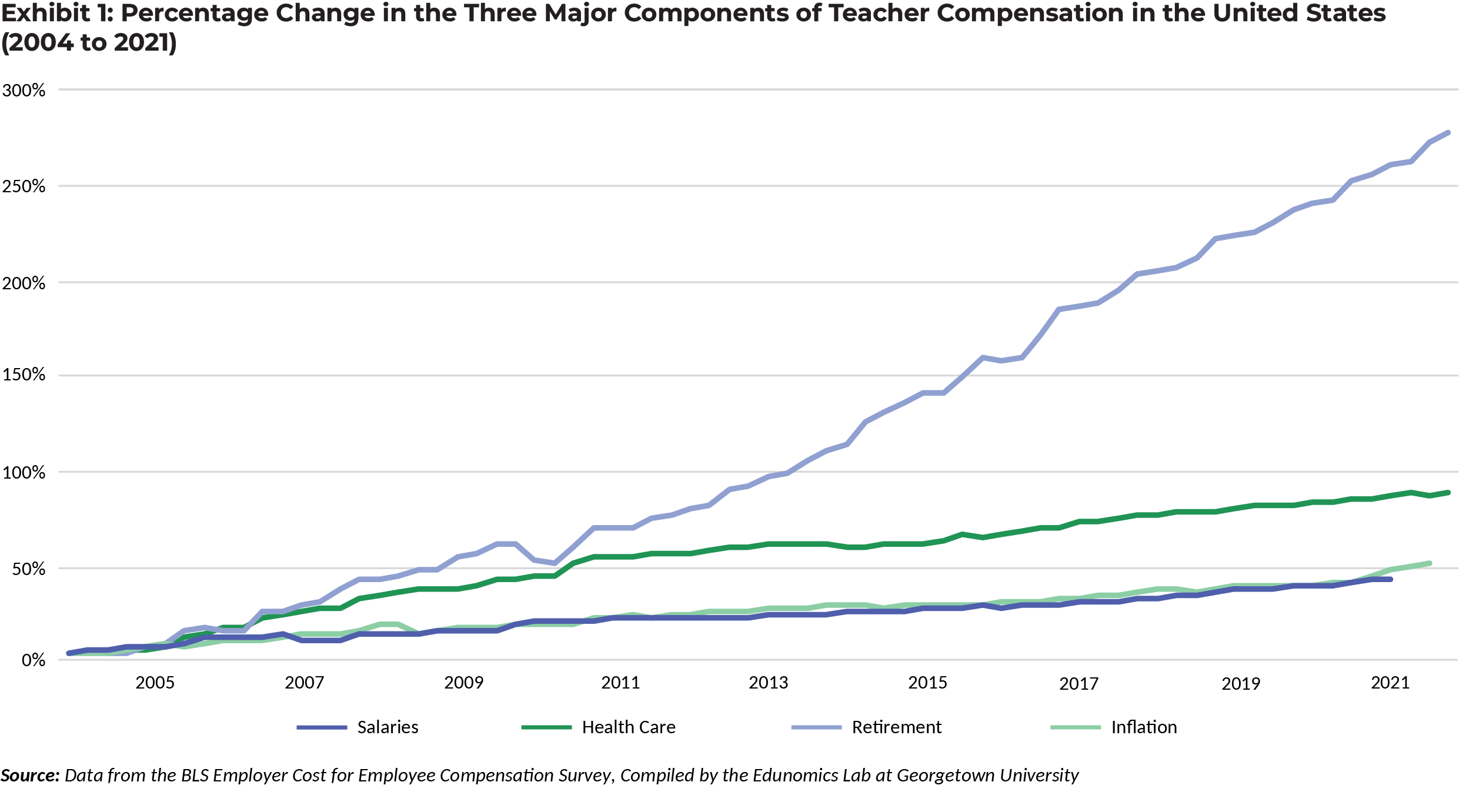
Exhibit 1 below illustrates the percentage change in the major components of teacher compensation compared to inflation. Between 2004 and 2021, teacher salaries roughly kept up with inflation, while healthcare costs, and especially retirement costs, significantly outpaced inflation. With more money paying for healthcare and the pensions of retired teachers, less is left over to support salary increases for teachers currently working in schools.
In 2021-22, 28% of North Carolina teachers’ total compensation was in the form of benefits, compared to 17% in the private sector in the South Atlantic region. At this level, for every dollar spent on teacher salaries, nearly 40 cents must be spent on pensions and benefits. In other words, a $100 million investment in teacher pay actually costs the state $140 million.