About BEST NC
BEST NC (Business for Educational Success and Transformation) is a 501(c)(3) nonprofit representing a nonpartisan coalition of business leaders who believe the future of our state’s economy is inseparable from the level of access and quality of education the state provides to its students.
We are committed to improving our state’s education system by providing North Carolinians relevant and timely education policy research, analysis, and recommendations. We are able to do this by convening a broad constituency; encouraging collaboration around a shared, bold vision for education; and supporting and promoting initiatives, policies, programs, and best practices that will uplift underperforming and underserved schools and students; elevate educators; set high standards and promote meaningful accountability; and personalize teaching and learning.
What Business Does Business Have Transforming Education?
North Carolina’s education system must keep pace with a rapidly changing economic landscape; which means teachers’ and principals’ jobs are constantly getting harder and more untenable. We all know something has to change. But what do executives know about education transformation? What North Carolina’s business leaders do understand is that schools, like their own companies, are human-centered organizations where services are customized; so why can’t our public schools borrow the best practices that help other industries successfully recruit, prepare, support, and compensate their own employees? Watch this short video to learn more.
Who We Are
BEST NC supports the creation of the boldest education success story in the United States – one that nurtures the talents of every student, from early learning to post-grad, by supporting, celebrating, and investing in their teachers and school leaders; researching, documenting, and promoting proven innovation; and setting high standards of success and accountability for all.
Our Vision
At BEST NC, we envision a North Carolina in which every student graduates with the knowledge, skills and behaviors to succeed in a competitive, global economy.
Our Mission
BEST NC’s mission is to unite an engaged and informed business perspective to build consensus toward dramatically transforming and improving education in North Carolina.
Our Core Values
- Student-Focused, Always
BEST NC will place the highest priority on the best outcomes for students of all ages.
- Evidence-Based and Solutions-Oriented
BEST NC will be data-driven and dedicated to promoting best possible practices that solve immediate problems and ensure a return on resource investments.
- Optimistic & Courageous
BEST NC believes that every student can succeed and North Carolina can have a world-class education system. We also know that elevating our publicly-funded schools will require hard work and difficult decisions.
- Collaborative
BEST NC will engage diverse, bipartisan stakeholders – including educators, experts, policymakers, and community leaders – to identify and build consensus around best practices.
-
A Commitment to
Continuous Improvement
BEST NC will be cognizant that the demands of our economy are constantly evolving, just like the demands placed on our students and educators, and that the solutions that work for our education system today may not work tomorrow.
Similarly, BEST NC as an organization will also commit to following the principals of accountability and continuous improvement.
Our Commitment to Students
BEST NC recognizes that factors outside of the classroom – different access to technology, information, transportation, food, and housing security – are the greatest detriments to a child’s future success. However, among the factors that can be influenced by public policy and programs, we know that education has the biggest impact on future success, enabling students to reach their individual potentials.
Therefore, BEST NC is dedicated to the belief that education is the key to opportunity for both individuals and our state, and are committed to making sure:
- Every student will be ready to learn.
- Every student will have an excellent teacher & school leadership.
- Every student will graduate with relevant, globally-competitive career and life skills.
- North Carolina will expect excellence and dynamism from every classroom, school building, education agency and institution, and community organization.
Organizational Document
Our Commitment to Students
The Imperative
The Moral Imperative
Every child in North Carolina deserves and is owed the opportunity to obtain an excellent education, regardless of his or her race, family income, or zip code.
The Economic Imperative
North Carolina’s future economy, business environment and quality of life depend on how well we equip today’s students with the knowledge, skills and behaviors they need to succeed in school, work, and life.
The Constitutional Imperative
The General Assembly shall provide by taxation and otherwise for a general and uniform system of free public schools… wherein equal opportunities shall be provided for all students.
Article IX, Section 2(1), North Carolina Constitution
The General Assembly shall provide that the benefits of The University of North Carolina and other public institutions of higher education, as far as practicable, be extended to the people of the State free of expense.
Article IX, Section 9, North Carolina Constitution
North Carolina is Facing a Growing Skills Gap
As business leaders, we believe the ultimate goal of education should be to create an educated and skilled citizenry that can be gainfully employed in North Carolina. Unfortunately, that goal is not being realized in North Carolina’s current education system and the state is experiencing a growing skills gap.
In 2020, 67% of jobs in North Carolina required some postsecondary education.
However, by 2020, only 59% of North Carolinians aged 25-44 had a postsecondary degree or high-quality workforce credential.
2 million North Carolinians aged 25-44 need a postsecondary degree or high-quality workforce credential by 2030.
As of December 2025, progress towards this goal is 86% complete.
Schools are Facing a Growing Talent Crisis
As business leaders, we understand how critical talent management is to the success of any organization. BEST NC’s Educator Innovation Plan is the most comprehensive plan that will successfully recruit, prepare, and retain excellent educators for all students, pre-k through post-graduate.
9,107 teachers out of the 90,105 teachers employed during the 2024-25 school year are no longer employed in North Carolina public schools, resulting in a statewide attrition rate of 10.1%.
Licensed Teacher Turnover: 9%
7,210 of 77,223
Beginning Teacher Turnover: 15%
1,897 of 12,882
Residency License Teacher Turnover: 15%
648 of 4,397
North Carolina is Struggling to Move from Good to Great
Our members want North Carolina schools to be the best in the country. We must focus on transformational changes that will take our education system from good to great.
reading on the National Assessment of Educational Progress (NAEP).
NAEP 8th Grade Reading Proficiency, by Student Subgroup (2024)
Alaska Native
Pacific Islander
Races
Disadvantaged
Students
The Industrial Model of Education
Overall, our current education system fails to meet the needs of students, educators, and our 21st century economy. In fact, the structure of the current education system was designed in the 1800s, reflecting the norms of the Industrial Revolution. Even though our economy and the needs of our students have shifted tremendously since then, the fundamental way we design our classrooms and the way we treat our education professionals has evolved very little.
Your systems are perfectly designed to get the results you’re getting.
Stephen Covey
The 7 Habits of Highly Effective People (1989)
Published by Simon & Schuster
These systemic flaws include the fact that principals have far too many direct reports, an unreasonable set of responsibilities, and little to no access to their budgets. It is just as bad for teachers, where beginning teachers are often given the hardest classrooms in the buildings and effective teachers are forced to leave the classroom if they want to extend their professional reach. Students also suffer under a teacher sorting system that deprives them of equitable access to educators, with high poverty schools having fewer effective teachers than more affluent schools. This would be unacceptable in any other modern, human-centered organization – and it is entirely fixable.
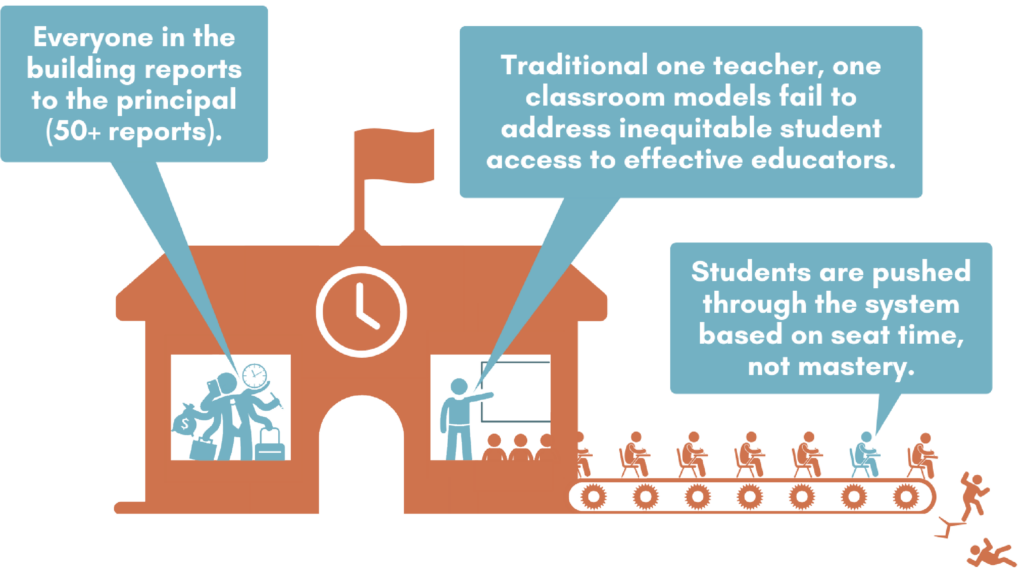
In the video below, we highlight these and other fundamental flaws in our educator support systems, while also identifying several ways we can transform these systems to better support educators, so educators can do what they love to do – support student success.
Our Theory of Change
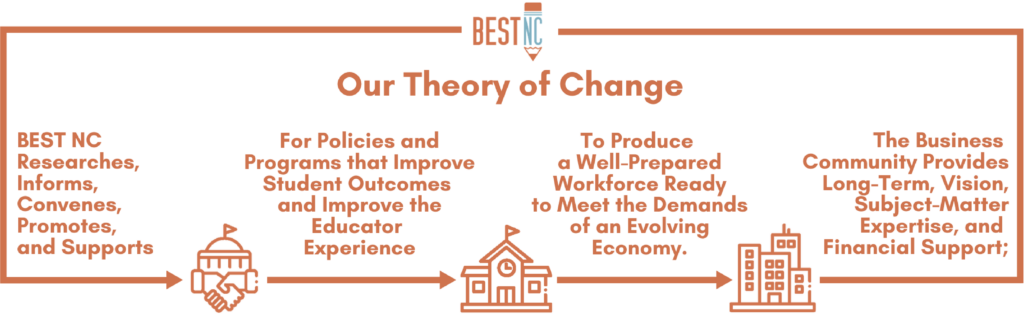
How We Do Business
Education requirements have changed dramatically over the past 50 years, but the underlying structure of our education system has remained pretty much the same. Meeting these needs and achieving our statewide attainment goals will require a steady, enduring, and laser-focused commitment to education transformation.
BEST NC recognizes that you can’t run schools like businesses; but you can borrow best practices from other human-centered industries and organizations to reimagine how the education system can better serve educators and their students. We facilitate this by:
- Convening
We convene a broad constituency of education stakeholders,
- Informing
We inform an engaged business community, and
- Promoting & Supporting
We promote & support the initiatives, programs, policies, research, and best practices that will move the needle toward a shared, bold vision for education.
Organizational Document
Our Theory of Change
BEST NC's Program & Policy Priorities
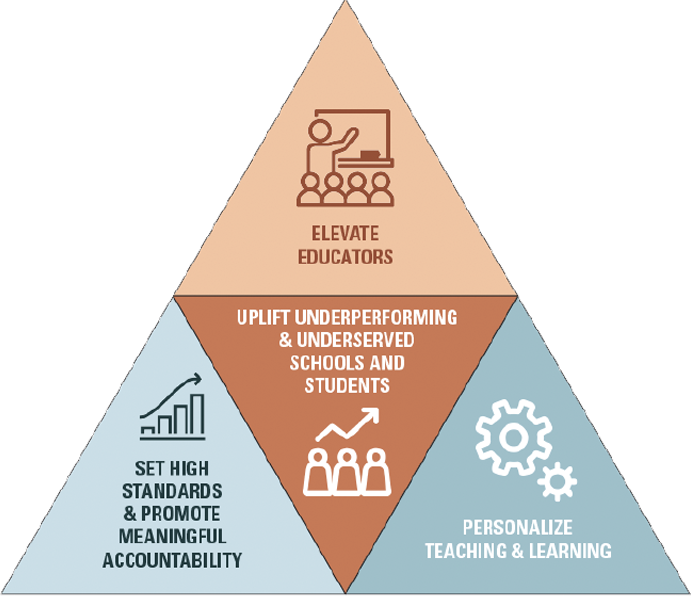
To advance the conditions that each North Carolina student needs to be successful, BEST NC is committed to promoting and supporting policy changes and state investments within each of our priority areas. To learn more, download BEST NC’s Program & Policy Priorities below.
- Elevating Educators
- Personalizing Teaching and Learning
- Setting High Standards and Promoting Meaningful Accountability
- Uplifting Underperforming and Underserved Schools and Students
Organizational Document
BEST NC’s Program & Policy Priorities
BEST NC's Educator Innovation Plan
BEST NC has used these four pillars to guide our work as we have engaged alongside key education stakeholders to design and implement innovative student-focused, data-driven policies, programs, and initiatives that will address the systemic barriers facing North Carolina’s education system, specifically the educator pipeline. BEST NC’s strategic and actionable effort to support systemic transformation is called The Educator Innovation Plan.
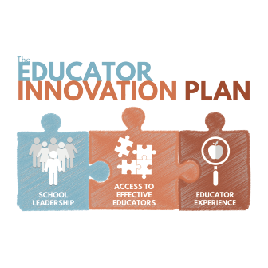
Educator Innovation
Educator Innovation Plan
BEST NC's Educator Innovation Plan
BEST NC has used four pillars that make up our Program & Policy Priorities to guide our work as we engage alongside key education stakeholders to design and implement innovative student-focused, data-driven policies, programs, and initiatives that address the systemic barriers facing North Carolina’s education system, specifically the educator pipeline. BEST NC’s strategic and actionable effort to support systemic transformation is called The Educator Innovation Plan. Visit our Educator Innovation Plan landing page below to learn more about our work to sustainably transform education in North Carolina.
Educator Innovation
Educator Innovation Plan
Who We Are Not
BEST NC does not sell a service or a product, and we do not profit from the initiatives, programs, policies, or best practices that we support. All publications – reports, policy briefs, data analysis tools and visualizations, presentations, videos, recommendations, and other materials – are made available to the public for free in order to support the robust, diverse, and dedicated education transformation work being done throughout the state of North Carolina and across the country.