
Early Literacy in North Carolina
Published 2024 | BEST NC
For decades, literacy instruction varied widely in schools across the United States. Many schools used what is called a “Balanced Literacy” approach, which emphasizes surrounding students with literature that they enjoy, with less focus on direct instruction of reading skills. This approach has been shown to be ineffective and, across the nation, states and districts are now shifting towards teaching practices that are aligned with the Science of Reading. The Science of Reading refers to a body of research that details how young students learn to read, including explicit (taught directly rather than implicitly or through discovery) and systematic (in a pre-determined order) instruction on fundamental reading skills like phonemic awareness, phonics, fluency, and vocabulary.
North Carolina Legislation and Investments in the Science of Reading
Recognizing the significant impact of early literacy on students’ long-term academic and social outcomes, in 2013, the North Carolina General Assembly established the Read to Achieve program to ensure that all 3rd grade students were proficient in reading before being promoted to fourth grade. After several years of implementation, the Excellent Public Schools Act of 2021 modified Read to Achieve and required all public schools to adopt a Science of Reading-aligned approach to reading instruction. The 2021 state budget also appropriated $37.5 million in federal COVID relief funding to train all elementary school teachers and principals in the Science of Reading. The following year, the 2022 state budget appropriated $15 million in recurring funding to create one early literacy specialist position in each school district and eight regional early literacy coaches.
Beginning in the summer of 2021, all PreK-5 classroom teachers, special educators, and ELL teachers, as well as one administrator and coach from each elementary school, received Language Essentials for Teachers of Reading and Spelling (LETRS) training, a 160-hour course of study that takes two years to complete and instructs teachers in what literacy skills need to be taught, why, and how to teach them. School districts were placed into three cohorts, with the final cohort completing its training in spring 2024.
The National Landscape
Since 2013, 47 states have passed laws to encourage instructional practices aligned with the Science of Reading, including North Carolina. According to a recent ExcelinEd study of state literacy policies, North Carolina is one of a handful of states leading the nation in the implementation of the Science of Reading. The study found that North Carolina has fully implemented 11 of 18 Early Literacy Fundamental Principles, tied for most in the nation, alongside Alabama.
Figure 1: Adoption and Implementation of the 18 Early Literacy Fundamental Principles* (2024)
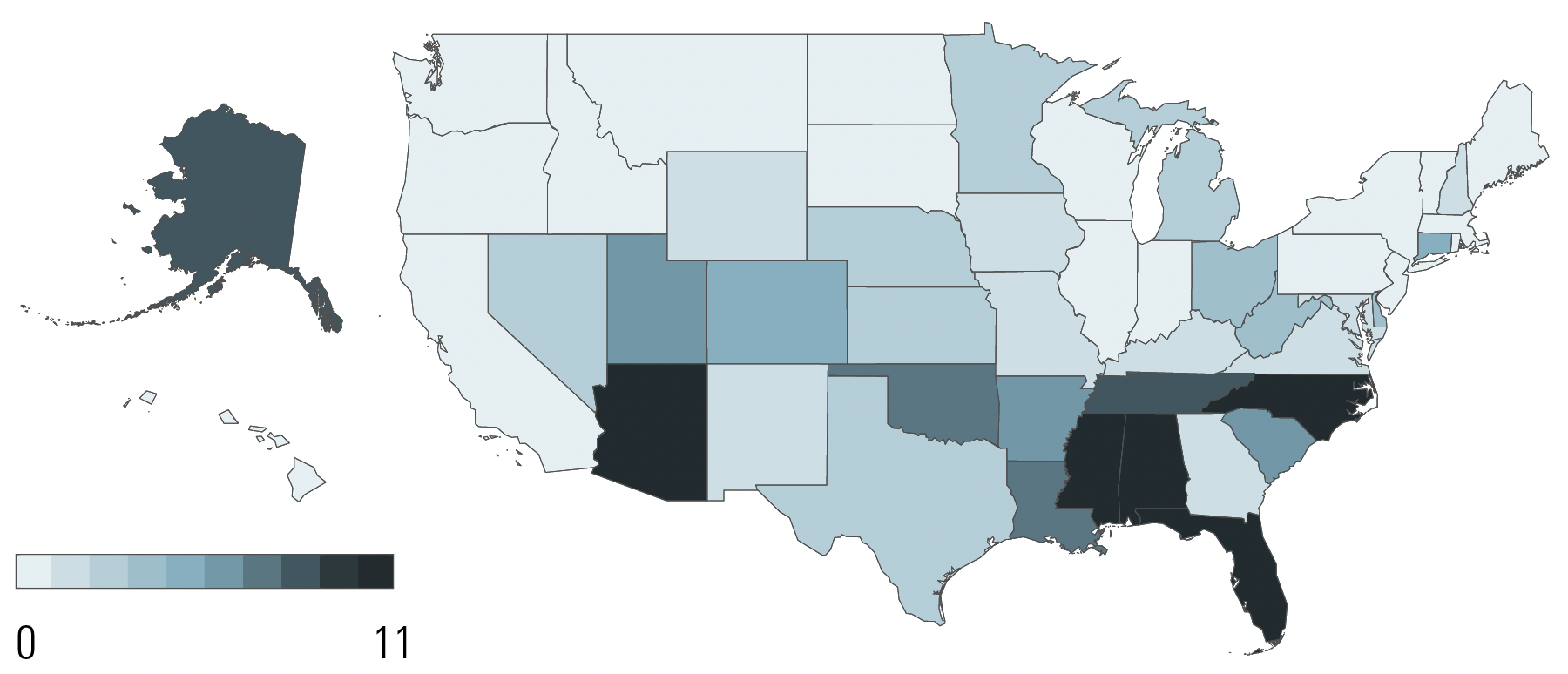
* Early Literacy Fundamental Principles are outlined in ExcelinEd’s Comprehensive Early Literacy Policy study.
North Carolina earned high marks for training all elementary teachers in the state in the Science of Reading, for the use of a universal screener to test the literacy skills of all students in grades K-3, for providing reading camps to all struggling readers entering grades 1-4, and for requiring educator preparation programs in the state to align coursework to the Science of Reading.
Early Indicators: Impact on Student Achievement
The first year of statewide implementation of Science of Reading-focused policies was the 2022–23 school year. NC Department of Public Instruction officials have stated that they will likely have a full understanding of the impact of these policies in 2026–27 when students who are in kindergarten in 2023–24 reach 3rd grade.
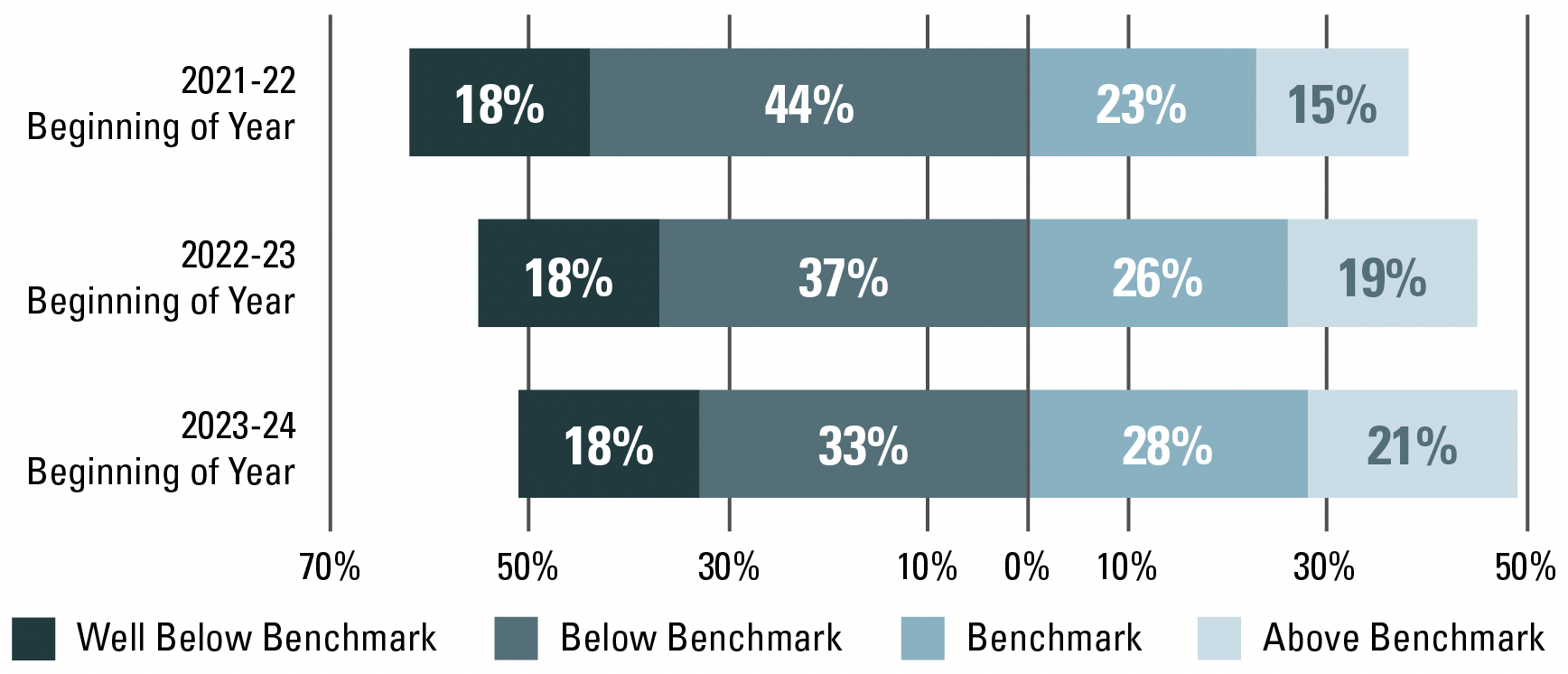
Evidence from early literacy screeners of students in grades K-3 shows year-over-year increases in the percentage of students who are “on track,” with 49% of K-3 students at or above the benchmark in 2023–24, compared to just 38% in 2021–22. Because the Science of Reading implementation began after the start of the COVID-19 pandemic, it is difficult at this time to determine the extent to which improved student performance is the result of Science of Reading-aligned instructional practices, given that other interventions have been deployed related to overall learning recovery efforts. In order to measure the full impact of North Carolina’s early literacy efforts, it will be important to examine student results on End-of-Grade reading assessments in grades 3-8, and to continue to monitor the early acquisition of literacy skills of students in grades K-2.
Figure 2: Students in Grades K-3 “On Track” on DIBELS 8 Universal Early Literacy Screener in North Carolina Public Schools (2021–22 to 2023–24)
What Comes Next?
Maximizing the impact of North Carolina’s investment in early literacy will depend upon the coordinated efforts of NC DPI and local school districts, including:
- Strategic deployment by school districts of Literacy Intervention funding, which can be used to pay for literacy interventions for struggling readers (including summer reading camps), provide signing and performance bonuses for reading teachers, and provide LETRS training for new teachers in the district.
- Identifying and purchasing high-quality curricular materials that are aligned with the Science of Reading, and then training teachers to effectively use those materials.
- Identifying and sharing best practices for school- and district-level early literacy curriculum, instruction, assessment, and professional development to encourage the adoption of evidenced-based best practices statewide. For instance, Advanced Teaching Roles schools can leverage the leadership capacity of advanced roles teachers to support whole-school implementation of Science of Reading-based instructional strategies and curriculum.
ExcelinEd Early Literacy Policy Map; NC DPI Report to the State Board of Education — 2023–24 Early Grade Literacy Proficiency; NC DPI LETRS Implementation, 2021–2025
About This Series
This post is part of BEST NC’s 2024 Facts & Figures: Education in North Carolina Spotlight On: series. View the full report at NCEdFacts.org or visit BESTNC.org.