
Don Curtis Interview with Brenda Berg – Carolina Newsmakers
North Carolina Teachers and State Employee Retirement System and Health Benefits

Note: This blog post features a brief from page 26 of our 2018 Facts & Figures publication, contextualizing North Carolina education data with a short description of an historical feature or a critical issue in North Carolina. Read more and find further information at www.NCEdFacts.org. All full-time employees in North Carolina public schools participate in the state’s Teachers and State Employees Retirement System (TSERS). TSERS provides qualifying employees a guaranteed salary and individual health benefits upon retirement from state government. In North Carolina, employees vest in TSERS after five years of service. Employees may retire with unreduced benefits after 30 years at any age, after 25 years of service at age 60 or older, or after five years at age 65 or older. Teachers contribute 6% of their pre-tax salary to TSERS, a rate that has been consistent since 1975. Nearly all states maintain a defined benefit (pension) plan for teachers and other state employees; in North Carolina and 29 other states, all teachers also participate in social security. TSERS is roughly comparable to the national median state plan and significantly more generous than the private sector average. Retiree health benefits in North Carolina are significantly more generous than the national median state plan and the private sector. Active state employee premiums for individual health care coverage are more generous than most other state plans and the private sector, but less generous than average for family plans. Source: North Carolina TSERS Handbook, NCGA Fiscal Research Division – Comparison of the Value of Employee Benefits
Principal Pay in North Carolina
Note: This blog post features a brief from page 30 of our 2018 Facts & Figures publication, contextualizing North Carolina education data with a short description of an historical feature or a critical issue in North Carolina. Read more at www.NCEdFacts.org. In recent years, principal pay in North Carolina ranked last in the Southeast and near the bottom nationally. In 2017, the North Carolina General Assembly transformed the state salary schedule for principals with an investment of $24M, or an average raise of approximately nine percent. The previous statewide schedule was based on each principals’ years of experience, level of education, and the number of teachers in the school they led. Annual state-funded pay ranged from $52,656 to $111,984, with an average of $64,416 in 2017. The updated schedule is based on the size of the school and the principal’s growth status (derived from students’ performance on standardized End-of-Course and End-of-Grade exams). Principals are also eligible for two stackable bonuses based on their school-level growth scores and school performance grades: Source: North Carolina General Assembly – 2017 Appropriations Act
Statement from BEST NC on Principal Pay

Cary, NC – This year, North Carolina made the largest investment in state history in principal salaries through an updated salary schedule and bonus opportunities. The impetus was an average principal salary ranking at the bottom of the Southeast and among the lowest in the nation and increasing recognition that that North Carolina’s way of paying principals was outdated and convoluted.
Raising and Transforming Principal Pay: North Carolina Leading the Nation
Amid a flurry of budget negotiations, a gubernatorial veto and the subsequent legislative veto override this summer, it’s been easy to get caught up in the partisan analysis of North Carolina’s latest $22B state budget. Like any budget – or any 438-page document, for that matter – it is a complex list of competing priorities, with parts both to like and to criticize.
Legislatures get mixed bag of teacher pay proposals
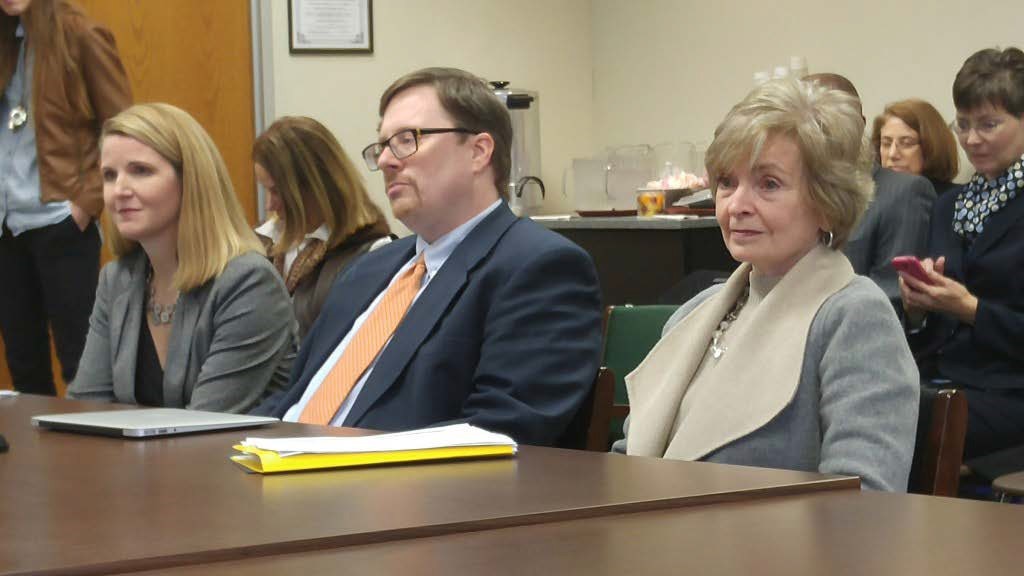
NEWS: CJ EXCLUSIVES Legislators Get Mixed Bag of Teacher PayProposals Atkinson’s call for 10-percent hike draws cool reception Legislators Get Mixed Bag of Teacher Pay Proposals – Carolina Journal From left, Best NC’s Brenda Berg, the John Locke Foundation’s Terry Stoops, and state Superintendent June Atkinson prepare to discuss teacher compensation on Jan. 27 before a House committee. (CJ Photo by Barry Smith) Barry Smith in CJExclusives February 1, 2016 4:30PM Before a state House committee last Wednesday, state Superintendent of Public Instruction June Atkinson recommended that all public school teachers in North Carolina get a 10 percent boost in their pay as part of a four-part plan to increase teacher compensation. Several members of the House Select Committee on Education Strategy and Practices were skeptical of the value of across-the-board raises along with their cost. In a presentation later that day, Terry Stoops, director of research and education studies at the John Locke Foundation, said universal pay raises send the wrong signals to the best and worst classroom teachers. And in remarks the following day to the same panel, House Speaker Tim Moore, R-Cleveland, rejected the idea of a 10-percent raise. Atkinson, who is running for re-election, likened the tiers of compensation to a four-layered wedding cake. The base level of the cake must be competitive enough to be attractive, Atkinson said. “I would want North Carolina to be extremely bold and to look toward a 10 percent increase for all of our teachers,” Atkinson said. The cost for providing all teachers 10 percent raises would be around $540 million. Rep. Jonathan Jordan, R-Ashe, asked Atkinson if spending the additional money would guarantee an end to the state’s teacher compensation problems. Atkinson said that she wanted to provide the committee with cost figures. “I recognize that it is a big item,” Atkinson said. “As state superintendent you have in statute that it is my responsibility to let the needs of our schools be known. If I were in your shoes, I would be worrying about that money, too.” Also presenting to the committee Wednesday were Stoops, Trip Stallings, director of policy research at the Friday Institute for Educational Innovation at N.C. State University, and Brenda Berg, president and CEO at Best NC. Stoops said he didn’t like across-the-board raises because they encourage bad teachers to remain on the job. “When you raise salaries across the board, both your best teachers and your worst teachers receive that salary, you are incentivizing the bad teachers to stay in the profession because they’re assuming that the across-the-board pay increase is what they will keep receiving, regardless of how they are performing,” Stoops said. “This creates a situation where we are essentially allowing those poor teachers to stay in the profession, and not really rewarding our most effective teachers.” Stoops said having a performance-based pay or differentiated pay would allow the best teachers to receive the compensation they deserve. Atkinson said the second layer of compensation requires identifying a certain percentage of teachers to be designated as teacher leaders, who would get additional pay for their roles. These teachers could be instructional coaches, peer evaluators, or grade level coordinators, among other things, she said. A third layer would boost compensation to attract teachers to low performing schools. The fourth layer would provide bonuses for teachers at schools that exceed anticipated growth, Atkinson said. Stallings said that differential pay is complex and cautioned against having a one-size-fits all approach to such salary boosts. He said that there is “very little evidence” of an impact on student performance when the focus is on pay-for-performance only. “What works in Charlotte is probably not going to work in Bertie County,” Stallings said. Stoops said that the purpose for having differential pay is teacher retention. He also said that teachers leave their job for various reasons, not just pay. “It’s not just compensation,” Stoops said. “It’s personal circumstances. They don’t like their principal. They think the school district is too big. The working conditions are terrible. They don’t have the books that they need, or the labor market is somehow enticing them to move on to another field.” Berg, from BEST NC, a nonprofit coalition of business leaders promoting improvements in public schools, said there a national crisis is brewing because millennials don’t want to go into the teaching profession. “Compensation is a piece of the puzzle,” Berg said. But she suggested that there is a need to treat teachers more like professionals. Berg offered some suggestions, such as providing scholarships or repaying student loans to teachers who get their degrees in North Carolina and agree to work hereafterward. “We need to elevate our respect for teachers,” Berg said. Rep. Paul “Skip” Stam, R-Wake, also suggested that the state no longer consider individual teachers’ salaries public records. “I think that’s the main reason that so many of they say they don’t want a differentiated performance pay because of envy and jealousy,” Stam said. “They don’t want their friend down the hall to know that they’re making $2,000 more than they are.” Even though Moore rejected Atkinson’s proposal for a 10-percent raise, Stoops said he expected this year’s short session of the General Assembly to enact a smaller across-the-board pay increase. “The amount of that pay raise will depend on the revenue outlook and the pressures from other budgetary areas,” Stoops said. “I would say 5 percent would be the ceiling.” categories: Education (PreK-12), K-12 Education, Spending & Taxes tags: ncga, teacher pay Click here to view the Legislators Get Mixed Bag of Teacher Pay Proposals PDF