


Resource library > TeachReadyNC: Teacher Apprenticeship in North Carolina

TeachReadyNC: Teacher Apprenticeship in North Carolina

North Carolina’s teacher pipeline is changing. Nearly half of all incoming NC teachers are entering the profession through lateral/alternative entry, and at nearly twice the rate of those entering through the UNC System. Lateral entry candidates enter the profession with no required classroom preparation experience, which means many of those teachers don’t see students until their first day on the job. Like other high skill professions, BEST NC thinks a state-supported, paid teacher apprenticeship program will help North Carolina’s largest and fastest-growing teacher candidate pool find the support and resources they need to ensure student success.

The Future Core of North Carolina's Teacher Recruitment Strategy is Closer Than You Think.

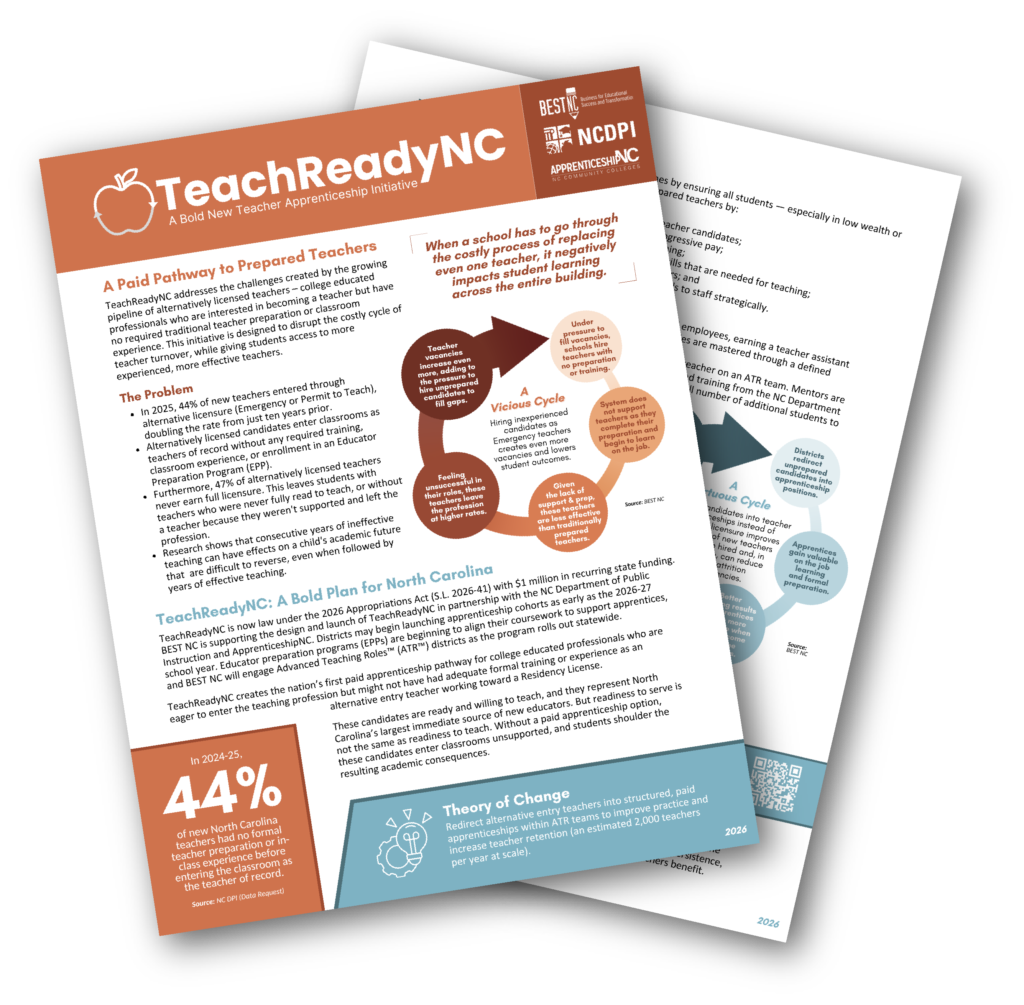
TeachReadyNC addresses the challenges created by the growing pipeline of alternatively licensed teachers: college-educated professionals who are interested in becoming a teacher but have no required traditional teacher preparation or classroom experience. It is designed to disrupt the costly cycle of teacher turnover, giving students access to more experienced, more effective teachers, while creating an apprenticeship pathway for college-educated professionals who are eager to enter the teaching profession but do not have adequate formal training or experience, as an alternative to Permit-to-Teach or Emergency Licenses.

Teacher Apprenticeship in North Carolina:
Exploring In-Classroom Preparation for the Next Generation of Teachers

Research has consistently found that teachers are the single-most important in-school factor for student success. For those seeking policy solutions that will improve student achievement, there is nothing more vital than a teacher pipeline that recruits high-quality candidates, provides them with opportunities to learn and grow in the profession, and retains them over time as their expertise and effectiveness increases.

BEST NC’s latest policy brief examines the past, present, and possible future of teacher apprenticeship in North Carolina and offers our recommendations for future analysis and implementation. 

Included in this report:

  • The components of successful teacher apprenticeship programs;
  • An overview of research-backed strategies;
  • The benefits and barriers teacher apprenticeship presents for North Carolina’s current teacher recruitment strategy;
  • The barriers facing apprenticeship implementation in North Carolina; and
  • Recommendations for strengthening teacher pay in North Carolina.

Breaking the Cycle of Beginning Teacher Attrition

Teacher attrition and vacancies are a major teaching workforce challenge, especially when it comes to North Carolina’s beginning teachers. An astounding 26% of first-year teachers in 2022-23 did not return to teach in North Carolina the following school year. This figure suggests that, early in their careers, many teachers lack the preparation and support necessary to persist in the profession.

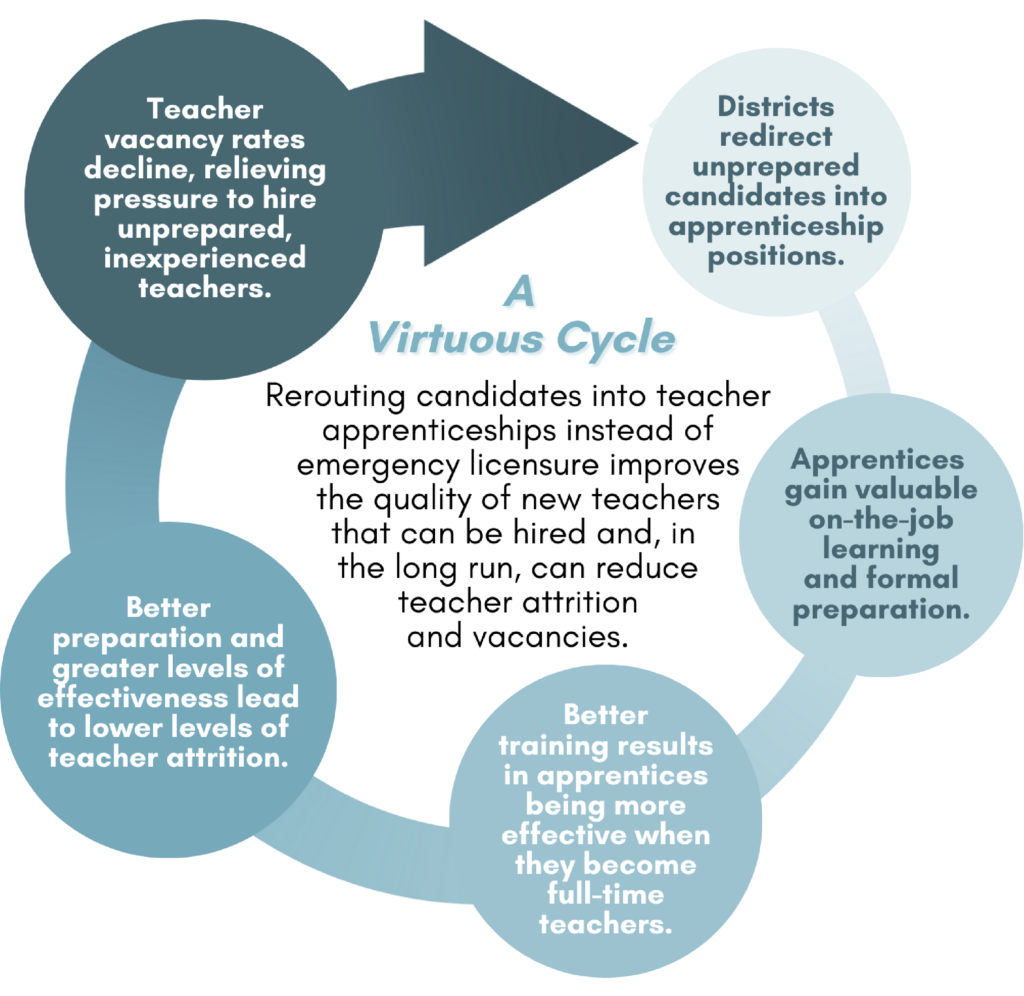
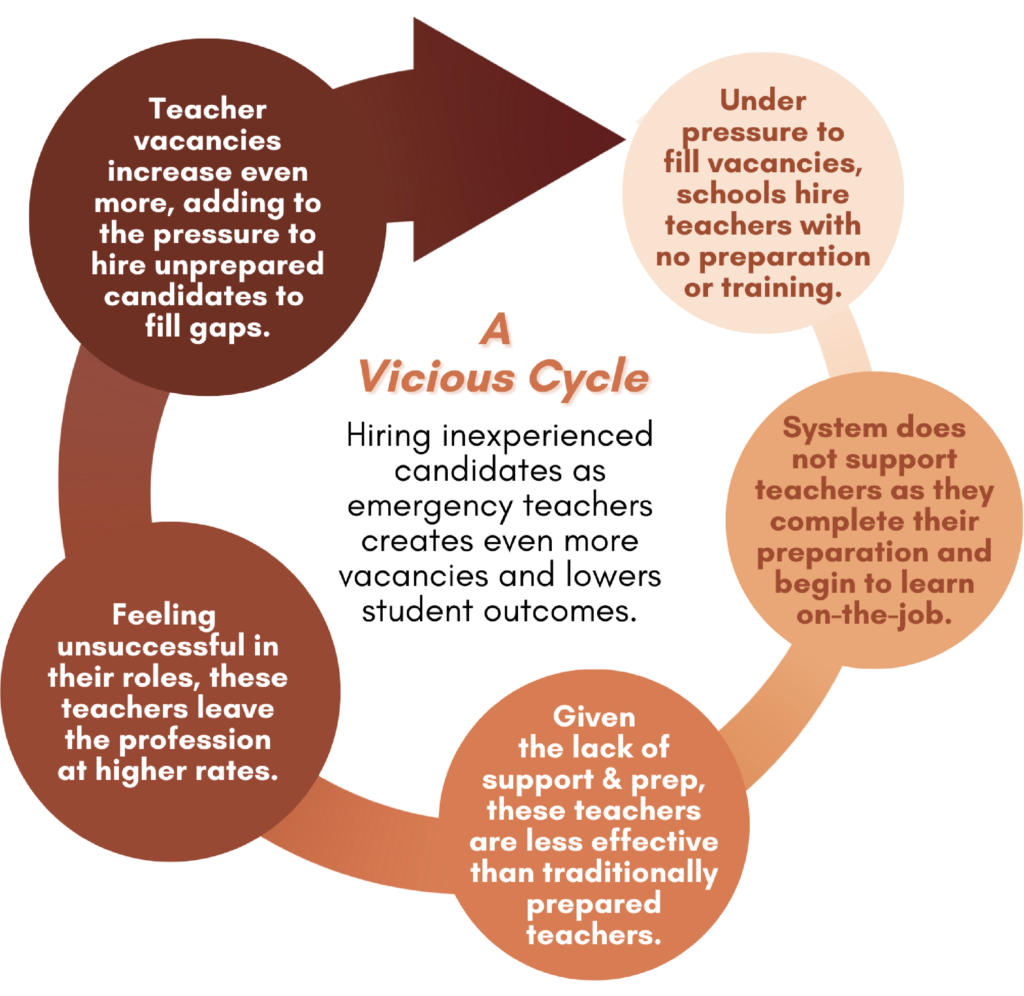
Elevated teacher attrition for beginning teachers has detrimental effects on students, because teachers markedly increase their effectiveness over the first six to eight years of their careers. When schools replace teachers lost to attrition with brand new teachers, they are, in effect, “starting over” with a new teacher who must enter the profession and improve their effectiveness over time. However, the process of hiring inexperienced candidates as emergency teachers creates even more vacancies, creating a “vicious cycle” whereby those positions are filled with more inexperienced candidates. Ultimately, this lowers student outcomes.

Expand the boxes below to learn more about the vicious cycle of beginning teacher attrition, and how TeachReadyNC can instead create a “virtuous cycle” of teacher recruitment, preparation, and positive student outcomes.

The Problem

  • In 2024, 43% of new teachers entered through alternative licensure (emergency or permit-to-teach), nearly doubling the rate from just eight years prior.
  • Alternatively licensed candidates enter classrooms as teachers of record without any required training, classroom experience, or enrollment in an Educator Preparation Program (EPP).
  • Furthermore, 47% of alternatively licensed teachers never earn full licensure, leaving students with teachers who were never fully ready to teach before they ultimately left the profession.
  • Research shows that two consecutive years of exposure to unprepared instruction can have near-irreversible consequences for a child’s academic future.

How Does TeachReadyNC Work?

  • Paid, Progressive Apprenticeship: Apprentices are full-time paid employees, earning a teacher assistant salary.
  • High-Quality Mentorship: Each apprentice is paired with a mentor teacher on an Advanced Teaching Roles (ATR) team. Mentors receive training and support from ApprenticeshipNC/NCDPI.
  • Integrated Educator Preparation: Apprentices are enrolled in a recognized Educator Preparation Program (EPP).
  • Clear Pathway to Licensure: Apprentices may participate for up to three years, progressively building competencies, earning credits, and completing requirements that lead to a full professional license.
  • Designed So Students Benefit Immediately: Qualified teachers can temporarily teach more students for a significant paid stipend, reducing the need to place unprepared teachers in classrooms.

BEST NC's Recommendations for Teacher Apprenticeship in North Carolina

BEST NC’s policy brief recommends a tiered implementation rolled out in two distinct phases:

Phase I: Competitive Pilots

  1. Establish a Competitive Grants Pilot Program that awards grants to school districts to launch
    Registered Teacher Apprenticeship Programs.
  2. NC DPI should act as the Sponsor and Technical Assistance Provider.
  3. School districts, selected through a Competitive Grants Process, should act as Registered
    Apprenticeship Program Employers.
  4. Require a rigorous independent evaluation of the Apprenticeship Pilots.
  5. Prioritize Teacher Assistant and alternative entry teacher candidates for Teacher Apprentice positions.
  6. Give priority to districts implementing Advanced Teaching Roles.
  7. Identify strategies to ensure district Human Resource Directors place alternative entry candidates into Teacher Apprentice positions Instead of Emergency License and Permit to Teach roles.
  8. Provide school districts with technical assistance to braid state and federal funding streams.
  9. Incentivize EPPs to design programs that support teacher apprenticeship and remove policy barriers.

Phase II: Statewide Implementation

North Carolina should utilize learnings from the teacher apprenticeship pilot program to inform how to scale the program statewide. As with any innovation, expansion will require patience, persistence, and a thoughtful initiative to ensure all students and teachers can benefit.

RESOURCE LIBRARY

Related Resources & Programs

Below is a curated selection of our catalogue of policy briefs, reports, videos, blogs, interactive data tools, and research around this initiative:

Policy Brief

Advanced Teaching Roles in North Carolina: Meaningful Career Opportunities for Teaching Professionals (2022)

This brief examines the state’s Advanced Teaching Roles™(ATR) program, explains what it is and the history of the initiative, summarizes research on its impact, shares…