
K-12 Population Shifts
Published 2026 | BEST NC | Section: Schools & Programs (Page 39)
Figure 1 – School-Aged Children (Ages 5–17) vs. Traditional K–12 Public School Enrollment (1970–2030)
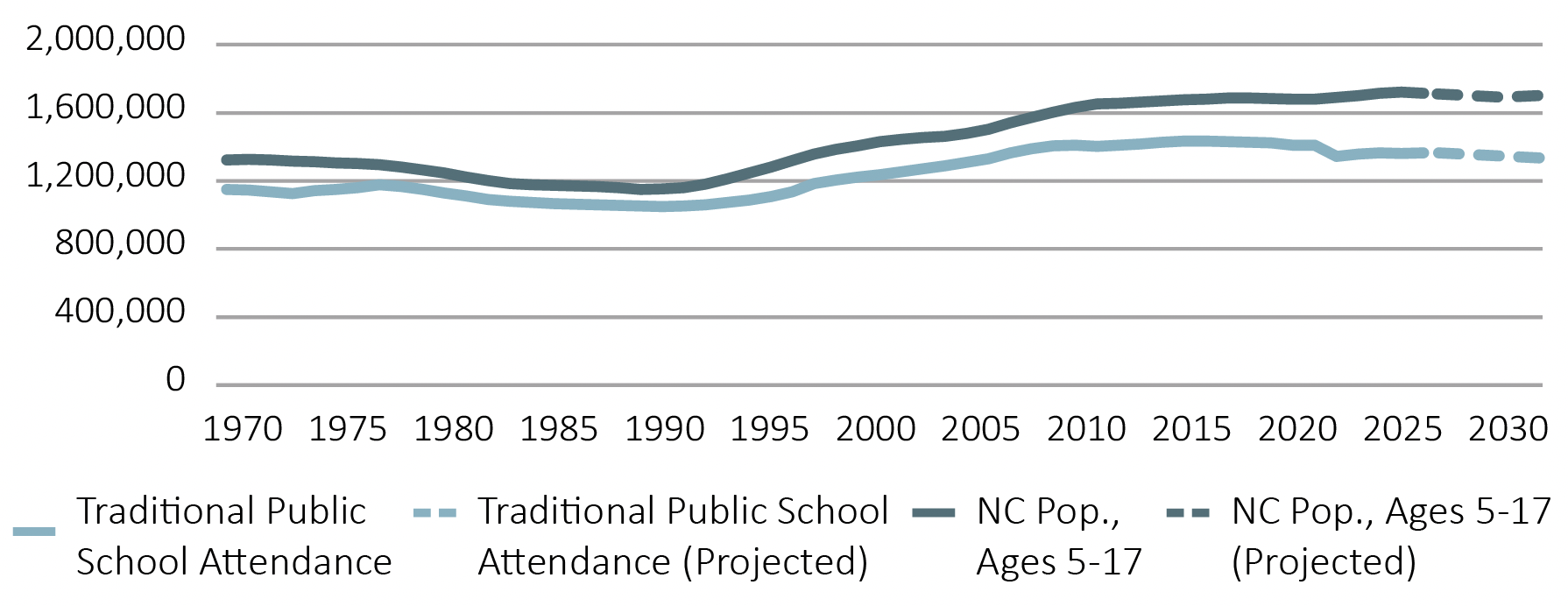
North Carolina Is Not Facing a Statewide Reduction in School-Aged Children, Defying National Trends
As birth rates have declined nationally, fears about a “demographic cliff” have become a national concern. While North Carolina is not projected to experience a statewide decrease in the number of school-aged (ages 5–17) children, there are declines in these populations in some regions of the state.
Most Districts Are Seeing Declines in Traditional Public School Enrollment
While the K–12 population as a whole is not declining, enrollment in traditional public schools is declining. Until 2010, the number of North Carolina children enrolled in traditional public schools was consistent with the school-aged population. Around 2010, traditional enrollment stayed fairly flat until it started to decline around 2021 as more students enroll in home schools, private schools, and public charter schools (see pgs. 8–10 for additional data and heat maps).
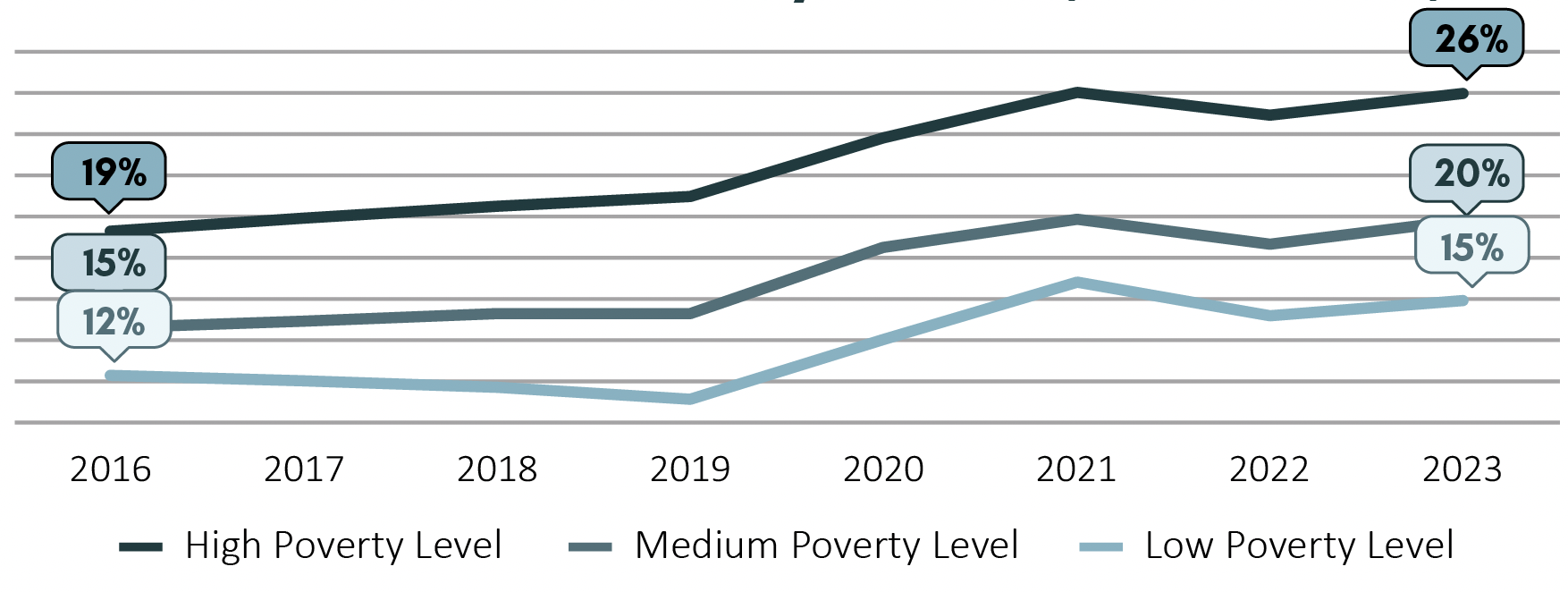
Similarly, high-poverty districts across the U.S. have been losing students more quickly than low- and medium-poverty districts. The same is true for predominately Black districts compared with districts that are mostly white or Hispanic. However, all demographics chose non-traditional public schools at higher rates in 2023 than in 2016 (see Figure 2).
Figure 2 – National Proportion of Non-Traditional Public School Enrollment, by District (2016 to 2023)
NC DPI Statistical Profile, Table 1; NC Office of State Budget and Management, Population Projections (by Age and Sex): Vintage 2025; NC Office of State Budget and Management, Population Projections (by Age and Sex): Vintage 2022 (Courtesy of Carolina Demography); National Bureau of Economic Research, US Census Intercensal Population Estimates; Brookings Institution, Declining public school enrollment (2025).
About This Series
This post is part of BEST NC’s 2026 Facts & Figures: Education in North Carolina Spotlight On: series. View the full report at NCEdFacts.org or visit BESTNC.org.