

Advanced Teaching Roles™ and Student Growth in North Carolina
Published 2026 | BEST NC | Section: Achievement (Page 62)
The Advanced Teaching Roles (ATR) initiative began in 2013 as a public-private partnership in Charlotte-Mecklenburg Schools called Project L.I.F.T., using Public Impact’s Opportunity Culture model. ATR has since been adopted in about 1/3 of all districts, becoming the nation’s only state-supported, district-led strategic staffing initiative.
As of Fall 2026, more than 600 schools across North Carolina will be actively implementing ATR staffing models. These schools rely on Adult Leadership teachers who lead a team of three to eight teachers to extend the reach of highly effective educators, provide in-classroom coaching, and take direct responsibility for student outcomes. Teachers also earn up to $21,000 on top of their base pay to take on these advanced roles.
Approximately 89% of schools implementing ATR qualify for Title I funding, which means they have a higher poverty population. Also, most ATR schools are using Public Impact’s Opportunity Model (OC). A 2024–25 analysis of Title I ATR schools using OC (ATR-OC schools) shows strong results. These schools are two to three times more likely to achieve high growth than comparable non-ATR Title I schools.
Percentage of Title I Schools Exceeding Growth Expectations, by OC™ School Status (2024–25)
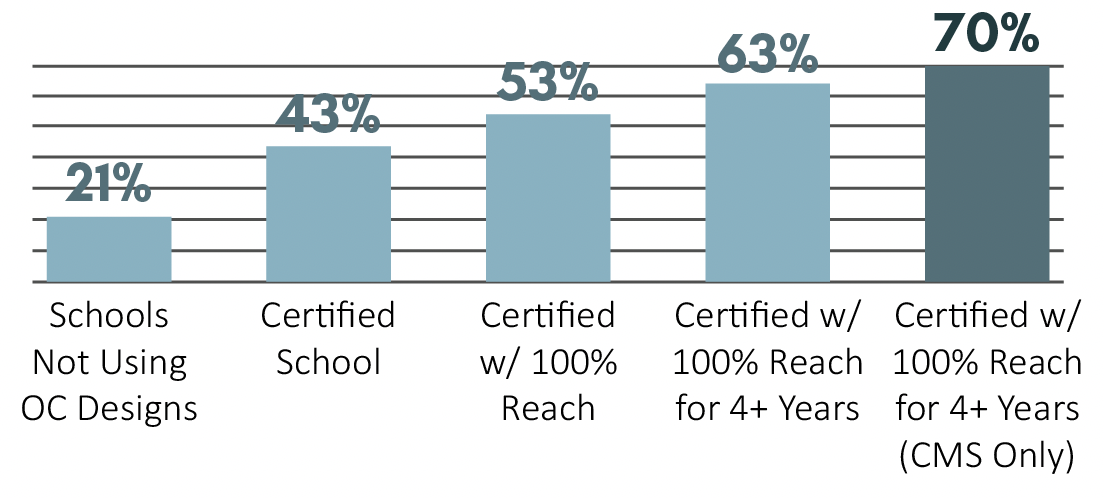
Specifically, 43% of participating ATR-OC Title I schools exceeded growth targets, compared with just 21% for non-OC Title I schools. Meanwhile, ATR-OC Title I schools that serve all students in core subjects (100% reach) and sustain Advanced Teaching Roles teams for four or more years saw 63% achieve high growth — three times the rate of other Title I schools. The data are clear; ATR expands access to excellent teaching for students who need it most.
Charlotte-Mecklenburg Schools continues to lead in both scale and depth of implementation. Nearly every public school in the district is implementing the ATR model. In 2024–25, schools with ATR teams were more likely to achieve high growth and less likely to post low growth than in prior years. Approximately 70% of schools with four or more years of implementation exceeded growth targets.
Statewide results remain strong, even when excluding Charlotte-Mecklenburg Schools. Title I schools with four or more years of implementation are still more than twice as likely to achieve high growth. These outcomes demonstrate that the model works across districts and contexts.
ATR is currently concentrated heavily in higher poverty schools, making its results especially meaningful. The initiative strengthens educator pipelines while accelerating student learning in historically underserved schools by attracting, developing, and retaining teacher talent.
As implementation deepens across North Carolina, the evidence is clear: design matters, duration matters, and reaching all students matters. North Carolina is proving that when excellent teaching reaches every student, the results follow.
2025 Advanced Teaching Roles Annual Evaluation Report, BEST NC Advanced Teaching Roles; Public Impact: Opportunity Culture Stats.
About This Series
This post is part of BEST NC’s 2026 Facts & Figures: Education in North Carolina Spotlight On: series. View the full report at NCEdFacts.org or visit BESTNC.org.